Early Childhood Education · Guide
What Is the Reggio Emilia Approach?
By Dr. Karen Page, early childhood specialist and author · September 2026
The Reggio Emilia approach is a philosophy of early childhood education built on one powerful idea: children are competent, curious, and capable of constructing their own learning. Rather than delivering a fixed curriculum, teachers listen closely to children's questions and theories, then build rich, long-term projects around them — supported by beautiful environments, expressive arts, and careful documentation of the learning journey.
Where it comes from
The approach grew out of the municipal infant-toddler centres and preschools of Reggio Emilia, a city in northern Italy. After the Second World War, local families and educators — guided by the educator Loris Malaguzzi — built schools founded on democracy, community, and deep respect for children. Those schools are still run today through the Loris Malaguzzi International Centre, where educators from around the world (myself included) travel to study the philosophy at its source.
Because it is a philosophy rather than a franchise or scripted program, Reggio-inspired practice looks slightly different everywhere. Schools adapt its principles to their own culture, language, and community — which is exactly why it has taken root so naturally in international schools across the world.
The core principles
1. The image of the child
Everything in Reggio begins with how you see the child. Children are not empty vessels waiting to be filled — they arrive full of ideas, theories, and questions. When adults hold this image of a competent child, they plan differently: they offer real challenges, trust children with meaningful work, and take their thinking seriously.
2. The hundred languages of children
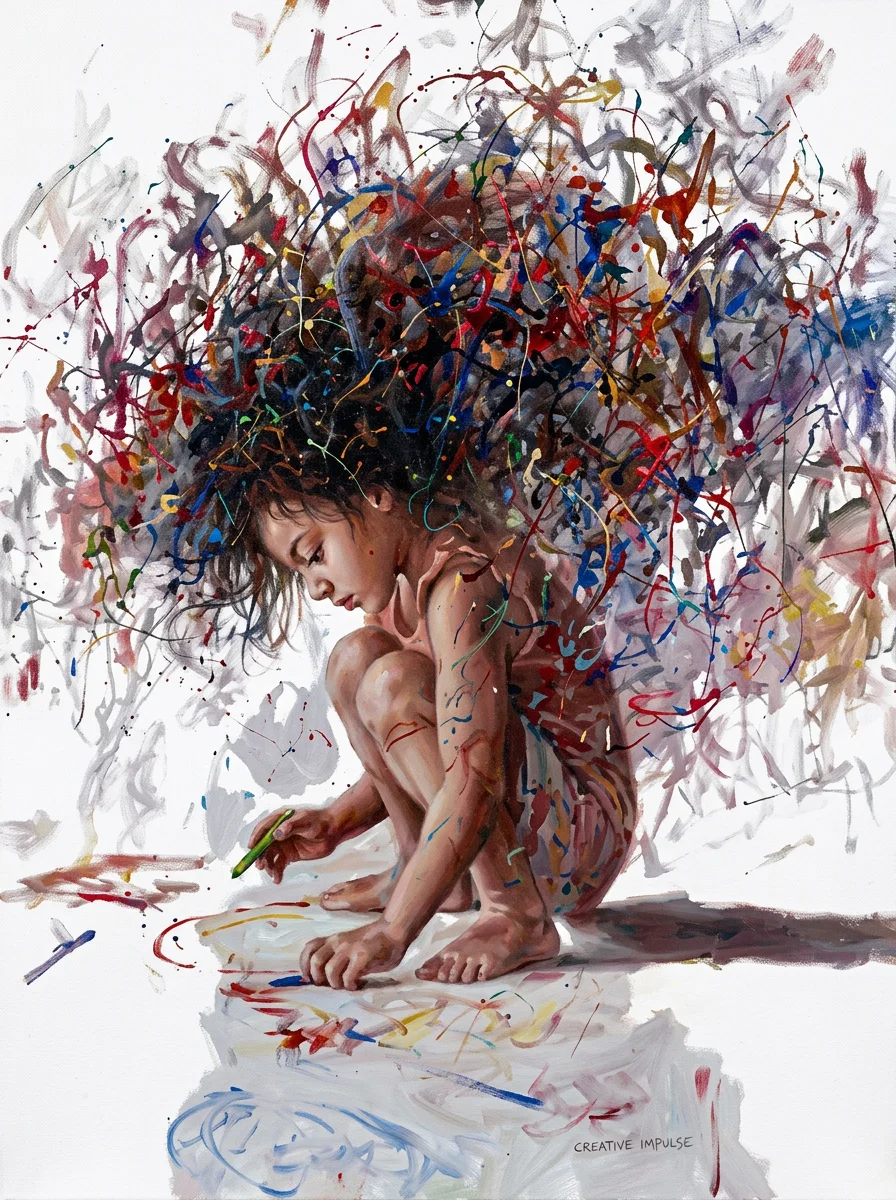
Children express understanding in many ways — drawing, painting, sculpture, movement, music, dramatic play, construction, and spoken and written language. Reggio calls these the "hundred languages." A child who cannot yet explain an idea in words may show it beautifully in clay or shadow play, and every one of those languages is treated as a valid way of knowing.
3. The environment as a third teacher
Alongside families and educators, the physical space itself is considered a teacher. Reggio-inspired rooms are calm, beautiful, and intentional: natural light, open-ended materials, children's work displayed with care, and spaces designed for small groups to investigate together. The environment invites curiosity rather than directing it.
4. Emergent, project-based learning
There is no week-by-week theme calendar. Instead, teachers observe what children are wondering about — shadows on the playground, how a snail moves, where rainwater goes — and extend those interests into projects that can unfold over days, weeks, or months. Literacy, mathematics, science, and the arts are woven through the investigation rather than taught in isolation.
5. Documentation that makes learning visible
Teachers photograph, transcribe, and display children's words and work. This pedagogical documentation serves three purposes: it helps children revisit and deepen their own thinking, it helps teachers plan what to offer next, and it gives families a genuine window into what their child is learning and how.
6. Relationships and community
Learning in Reggio is fundamentally social. Children work in small groups, testing their ideas against one another's. Families are partners, not spectators, and the school sees itself as part of its wider community and culture.
What it looks like at home
You do not need a school to honour the Reggio philosophy. At home it can be as simple as following your child's questions instead of rushing to answer them; offering open-ended materials — paper, clay, blocks, natural objects — instead of toys that do only one thing; creating a small, ordered, beautiful corner for play; and keeping a notebook or photo record of your child's ideas. Slowing down to observe before stepping in is the most Reggio move of all.
Reggio Emilia in international schools
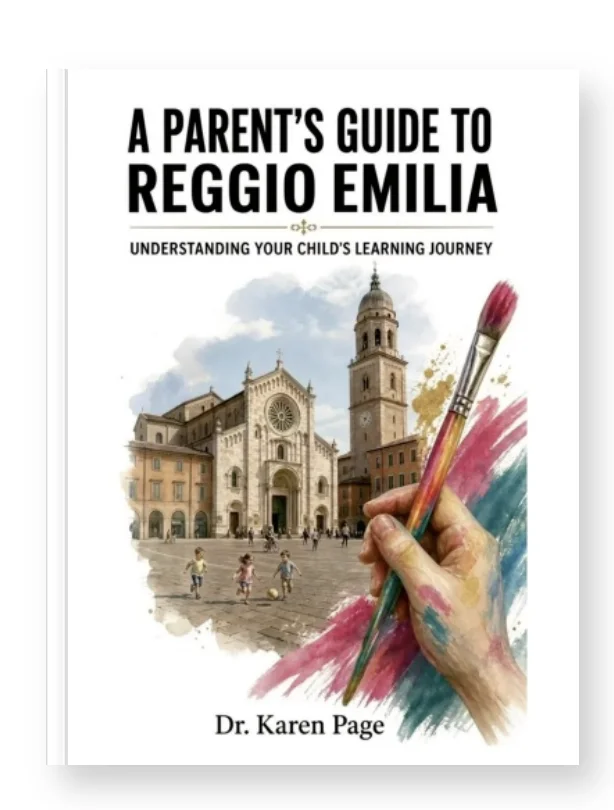
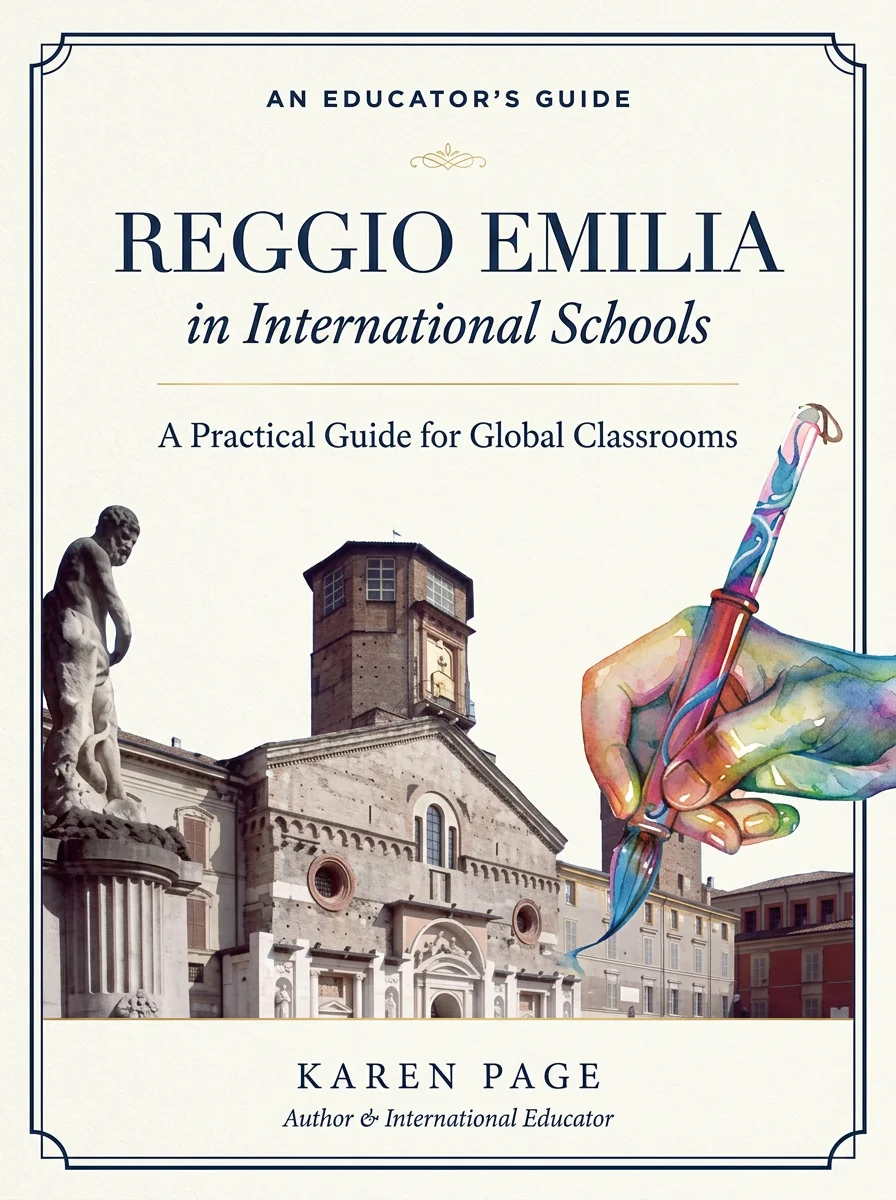
International schools are a natural home for Reggio-inspired practice: diverse languages and cultures mirror the belief that there are a hundred ways to express understanding. The practical work lies in adapting the philosophy authentically — aligning it with frameworks like EYFS, the IB PYP, or national curricula, training teams to document learning, and designing environments that reflect the local culture rather than a catalogue look. After leading early years programs across eight countries, this adaptation work is the subject of my book Reggio Emilia in International Schools and my online course for educators.
Frequently asked questions
- What is the Reggio Emilia approach in simple terms?
- The Reggio Emilia approach is a way of teaching young children that starts from a deep respect for the child as capable, curious, and full of potential. Instead of following a fixed curriculum, teachers observe children's interests and build long-term projects around them, using art, movement, language, and play as tools for thinking and expression.
- What are the main principles of the Reggio Emilia approach?
- The core principles are: the image of the child as competent and full of potential; the hundred languages of children, meaning children express understanding in many symbolic forms; the environment as a third teacher; emergent, project-based learning; pedagogical documentation that makes learning visible; and strong relationships between children, teachers, families, and the community.
- Is Reggio Emilia a curriculum?
- No. Reggio Emilia is a philosophy, not a prescribed curriculum or method that can be copied exactly. It emerged from the municipal infant-toddler centres and preschools of Reggio Emilia, Italy, and schools elsewhere adapt its principles to their own cultures, languages, and educational frameworks — which is why it fits so naturally into international schools.
- What age group is the Reggio Emilia approach for?
- The approach was developed for children from birth to age six, in infant-toddler centres and preschools. Its principles — listening, inquiry, documentation, and respect for the child — also influence practice with older children, but its heart is in early childhood.
- Can parents use the Reggio Emilia approach at home?
- Yes. Parents can follow their child's curiosity, offer open-ended materials instead of single-use toys, set up a thoughtful and beautiful space for play, slow down to observe and listen, and document their child's ideas through photos, drawings, and notes. These small shifts honour the child's thinking in everyday family life.
- How is Reggio Emilia different from Montessori?
- Both respect the child and value prepared environments, but they differ in emphasis. Montessori uses a defined set of materials and a structured sequence of individual work. Reggio Emilia is more flexible and collaborative: there is no fixed curriculum, projects emerge from group interests, and expressive arts and documentation are central.