Early Childhood Education · Guide
Preschool Learning Activities That Build Real Skills
By Dr. Karen Page, author and international early childhood educator · September 2026
If you're looking for preschool learning activities that actually teach something, here's the good news: you don't need worksheets, expensive kits, or a teaching degree. Children aged three to six learn best through play, conversation, and real hands-on experience. The activities below are the ones I've returned to again and again across decades of teaching young children in international schools around the world — low-prep, low-cost, and built on how young children genuinely learn.
How preschoolers learn
Before the activities, one principle matters more than any list: young children learn by doing. Touching, moving, talking, pretending, making messes, and making choices — that is the curriculum. Approaches like Reggio Emilia treat the child as capable and curious, the adult as a careful observer, and the environment as a teacher. When you offer materials and follow your child's interest, you are not "just playing" — you are teaching in the way that works best at this age.
Eight activity areas that cover everything
Language and storytelling
Read aloud every day — and stop to talk about the pictures, predict what happens next, and let your child retell the story their way. Make up stories together on walks. Sing songs with rhymes and actions. A rich diet of conversation and story is the single strongest predictor of later reading success.
Sensory play
Water, sand, playdough, rice trays, finger paint: sensory play builds fine motor control, calms busy bodies, and gives children raw material for endless pretend play. Add cups, funnels, and scoops, and pouring and filling become early lessons in volume and cause-and-effect.
Early math through everyday life
Sort buttons by color, count the plates at dinner, compare towers of blocks, hunt for circles and squares around the house. Math woven into play and routine feels like a game — and builds genuine number sense.
Building and construction
Blocks, boxes, and loose parts teach spatial reasoning, planning, balance, and persistence. When the tower falls, the learning is in the rebuilding. Resist the urge to fix it — ask 'what could you try?' instead.
Art and creative expression
Offer open-ended materials — crayons, paint, collage scraps, clay — without a model to copy. Process matters more than product: a child who mixes every color into brown has learned something real about paint.
Movement and outdoor play
Climbing, running, balancing, and digging develop coordination, confidence, and the body awareness that later supports sitting still and holding a pencil. Nature walks double as science lessons: collect leaves, watch insects, notice weather.
Social-emotional practice
Pretend play is where children rehearse life: taking turns, negotiating roles, naming feelings. Name emotions as they arise — 'you look frustrated that the pieces won't fit' — and model calming down out loud. These are the skills that matter most in the first year of school.
Practical life skills
Pouring their own water, helping chop a banana, dressing themselves, tidying a shelf: real tasks build independence, concentration, and pride. Activities like potty learning are part of this too — milestones go best when they are approached calmly, playfully, and on the child's timetable.
A word on milestones
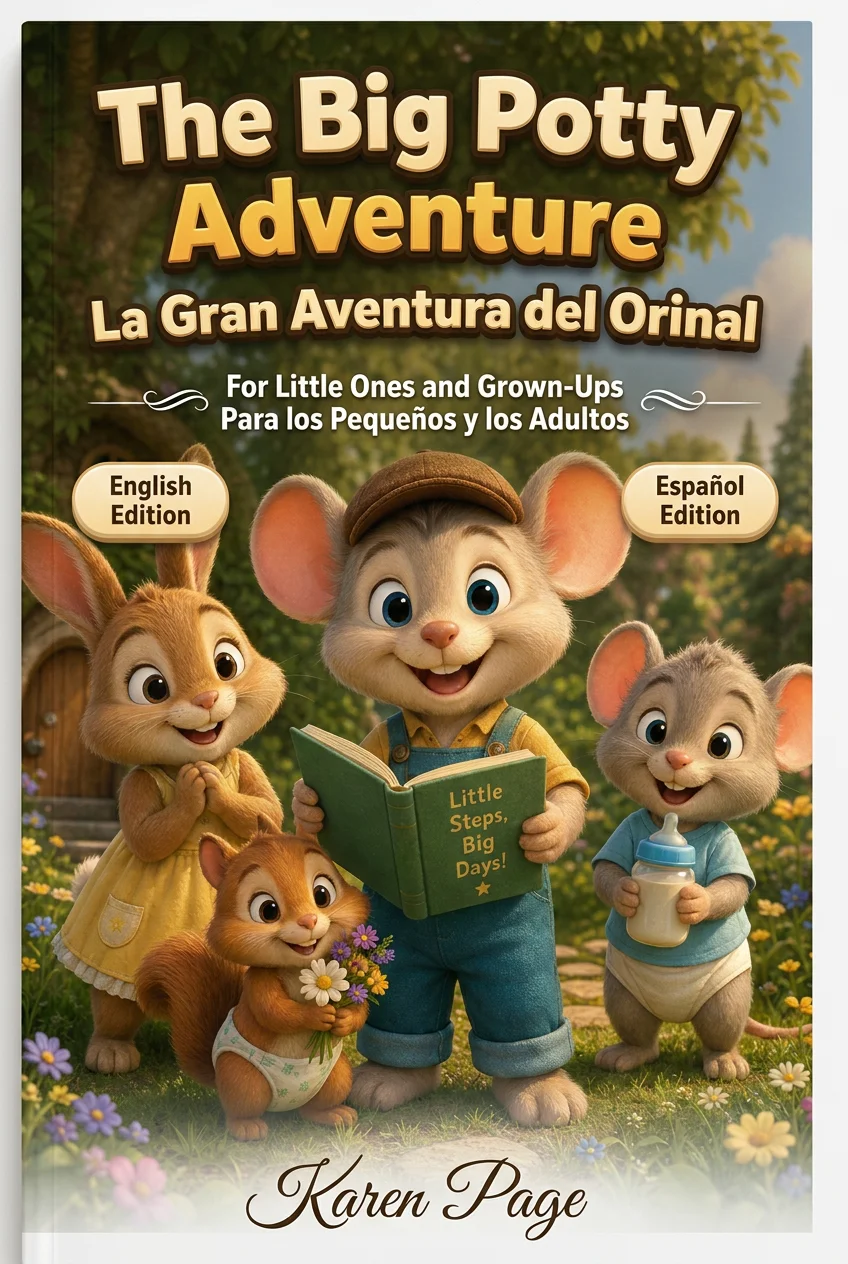
Learning at this age isn't only academic. Milestones like potty training, dressing independently, and managing big feelings are learning too — and they go best when they stay playful and pressure-free. That's why I wrote The Big Potty Adventure, a bilingual story that turns potty learning into an adventure children actually enjoy.
Frequently asked questions
- What are the best learning activities for preschoolers?
- The best preschool activities are playful, hands-on, and open-ended: sensory play, storytelling, sorting and counting games, building with blocks, art, music, and lots of conversation. Young children learn through doing, not worksheets — an activity that lets a child touch, move, talk, and make choices teaches more than a printed page.
- How long should a learning activity last for a 3- or 4-year-old?
- Follow the child's interest rather than the clock. Many 3-year-olds engage for 10–15 minutes; older preschoolers can stay absorbed for 30 minutes or more when the activity is genuinely theirs to direct. An engaged child who wants to keep going is a sign the activity is working — never cut deep play short to stay on schedule.
- Do preschoolers need worksheets to get ready for school?
- No. School readiness is built on language, self-regulation, social skills, curiosity, and physical coordination — all developed best through play and conversation. Early academics matter far less than a child who can listen, take turns, ask questions, and persist through a challenge.
- How can I teach early math without formal lessons?
- Bake math into daily life: count stairs as you climb them, sort laundry by color, compare which cup holds more water, set the table counting plates and forks, and notice shapes and patterns on walks. Children who experience math as part of play develop stronger number sense than children drilled with flashcards.
- What if my child isn't interested in the activity I prepared?
- That's normal and valuable information. Offer the materials without pressure, follow what captures their attention instead, and observe what they choose — their choices tell you what they're working on developmentally. Child-led interest is the engine of early learning; adult-planned activities are invitations, not assignments.
- How much screen time is appropriate for preschoolers?
- Guidelines such as those from the World Health Organization suggest no more than about an hour a day of sedentary screen time for children aged 3–4, and less is better. What matters most is what screens replace: hands-on play, movement, conversation, and sleep are the activities that build a young child's brain.
Go deeper
The book
The Big Potty Adventure
La Gran Aventura del Orinal — Bilingual English/Spanish Edition
View retailers →
The book
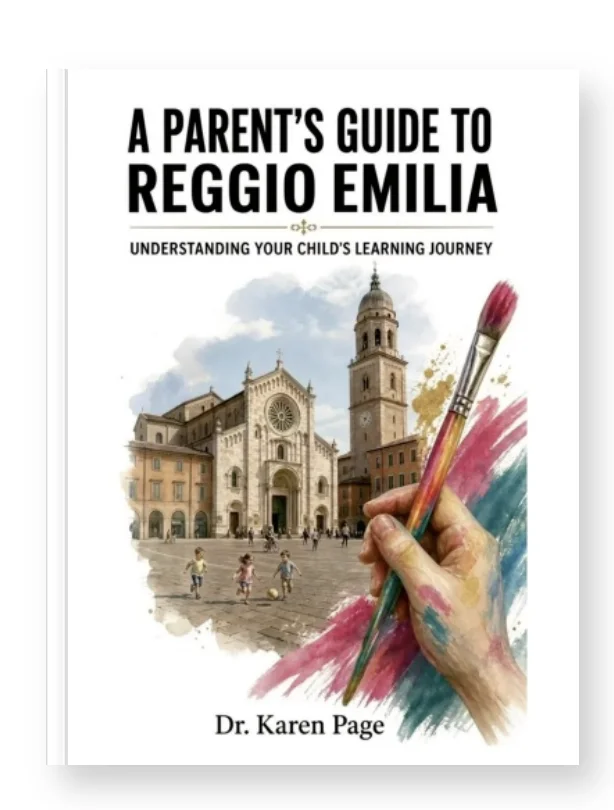
A Parent's Guide to the Reggio Emilia Approach
Understanding Your Child's Learning Journey
View retailers →
Online course
Reggio Emilia in the International Classroom
Professional training for educators — the philosophy behind play-based learning, in depth.
Enrol on Udemy →