Guide
Third Culture Kid Guide
A practical guide for parents raising children between cultures: moving well, saying goodbye properly, holding on to language and identity, and choosing schools that understand mobility. Written from eight countries of family life and early years teaching.
Moving: before, during, after
Children cope with international moves far better when the move is narrated rather than sprung on them. Tell them early. Show them photographs of the new place. Let them choose what travels in their own bag. Keep the last week for people, not packing — a proper goodbye to a teacher, a friend, a favourite park does more good than an efficient departure.
After arrival, protect the familiar. Same bedtime story, same Saturday pancakes, same soft toy on the same side of the bed. Small constants carry a child through a completely new city.
Grief, goodbyes and unresolved loss
The hidden cost of a mobile childhood is loss that no one marks. Friends vanish, houses are emptied, and adults are too busy to notice. Say plainly that it is sad. Keep a memory box or photo book for each posting. Let children write to the people they miss, and resist the urge to hurry them into being fine.
Identity and belonging
Third culture kids build a culture of their own from the pieces they have lived in. That identity is genuine, not a deficiency. Talk about the countries in your family story, cook their food, mark their holidays, and let your child hold several answers to "where are you from?" at once. Home, for many TCKs, turns out to be people rather than a place.
Language and school
Keep the home language deliberately: read in it, call family in it, find children to play in it. At school, ask how mid-year arrivals are welcomed, how language support works, and whether departures are acknowledged. A school that handles transition well shapes your child's experience more than its curriculum brochure does.
Global motherhood
Parents move too — often without a school, a team, or a ready-made community to land in. Building your own support abroad is not self-indulgence; a settled parent is the single strongest anchor a third culture kid has.
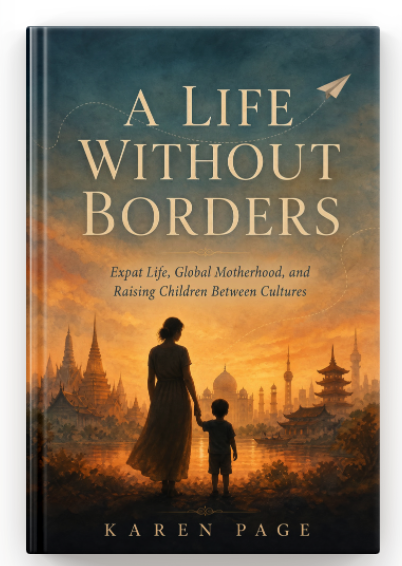
A Life Without Borders
Expat Life, Global Motherhood, and Raising Children Between Cultures
The full story behind this guide — expat life, global motherhood, and raising children between cultures.
Get your copyFrequently asked questions
- What should every parent of a third culture kid know first?
- That the experience has a name. Children who can say 'I am a third culture kid' have language for feelings that would otherwise stay confusing — the pull of two homes, the ache after a goodbye, the sense of belonging everywhere and nowhere. Naming it turns a private muddle into something a family can talk about.
- How do you prepare a child for an international move?
- Tell them early and honestly, in words matched to their age. Let them help with decisions they can genuinely influence. Say proper goodbyes to people, places, pets, and possessions. Take photographs of the ordinary things. And keep one or two rituals — a bedtime routine, a Sunday meal — completely unchanged through the move.
- How long does it take a child to settle in a new country?
- Expect months, not weeks. Many families find the first three months busy and distracting, months four to eight the hardest, and something like belonging arriving late in the first year. A dip in mood or behaviour after the initial excitement is normal, not a sign the move was wrong.
- How do you keep a home language alive abroad?
- Use it consistently at home, read aloud in it, and give children people to speak it with — grandparents on video calls, a weekend class, friends. Fluency follows purpose: children keep a language they need for relationships they care about.
- How do you choose a school for a third culture kid?
- Look past facilities at transitions: how the school welcomes mid-year arrivals, how it supports children learning the language of instruction, whether departures are acknowledged, and how curriculum continuity works if you move again. Ask what happens in a child's first week.
- How do you help a third culture kid answer 'where are you from?'
- Practise an answer together that is true and short — 'I'm British, I grew up in Bangkok and Nairobi' — and give permission to vary it by situation. The goal is not one tidy label but confidence that a complicated answer is a good answer.
- What about repatriation — moving 'home'?
- Repatriation is often the hardest move, because everyone expects it to be easy. The country has changed, the child has changed, and no one treats it as an adjustment. Prepare for it like any other international move, and give your child room to grieve the place you left.
Want the definition first? Read what a third culture kid is. For educators, see the Reggio Emilia in international schools guide.