Expat Life · Guide
What Is a Third Culture Kid?
By Dr. Karen Page, author and international early childhood educator · September 2026
A third culture kid — or TCK — is a child who grows up in a culture different from the one on their passport. Their parents' home culture is the "first" culture, the country they live in is the "second," and the blended identity they build between the two is the "third." It is less a place than a way of seeing the world: at home everywhere, and fully at home nowhere.
Where the term comes from
The term was coined in the 1950s by sociologist Ruth Hill Useem, who studied American families living in India, and later developed with David C. Pollock in the book Third Culture Kids: Growing Up Among Worlds. They noticed that children of expatriates did not simply adopt the host culture or keep their parents' — they created something in between, shared instinctively with other children who had lived the same mobile life.
What TCK childhood looks like
A TCK childhood is measured in airports, farewell parties, and "where are you from?" questions with complicated answers. Children might celebrate festivals from three countries, switch languages between the playground and the dinner table, and hold close friendships across time zones. New school systems, new foods, new rules for how people greet each other — adaptation becomes second nature.
Having lived in eight countries while raising children and leading early years programs, I have watched this adaptation happen hundreds of times: a child who arrives silent and watchful in September is translating for newcomers by spring.
The gifts
TCKs tend to develop remarkable strengths. They read people and situations quickly, because they have had to. They hold multiple perspectives at once, often speak more than one language, and feel genuine curiosity rather than fear toward difference. Many become bridges between cultures — in friendships, workplaces, and communities — for the rest of their lives.
The challenges
The same mobility carries a cost. Repeated goodbyes can teach children to detach before they are left. Belonging can feel conditional — "I'm from here, but not really." Grief over lost homes and friends is real but often invisible, because from the outside the life looks glamorous. And the question "where is home?" can follow a TCK into adulthood, answered most honestly by "with my people" rather than a place.
How parents can help
The single most powerful thing a parent can do is name the experience: children cope better with what they can talk about. Beyond that, build rituals around arrivals and goodbyes — a farewell dinner, a memory box, a first-week tradition in each new home. Keep connections alive with the people and places left behind. Let children grieve without rushing them toward the positives. And carry portable anchors with you: language, recipes, songs, and family traditions that make "home" something that travels.
Raising children between cultures
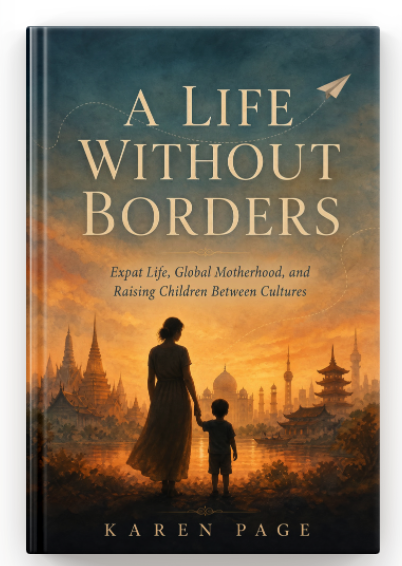
These questions — identity, belonging, transitions, and what children need to thrive in a globally mobile life — are the heart of my book A Life Without Borders: Expat Life, Global Motherhood, and Raising Children Between Cultures. Written from years of living and teaching across eight countries, it is a companion for families building a life between worlds.
Frequently asked questions
- What does 'third culture kid' mean?
- A third culture kid (TCK) is a child who spends a significant part of their developmental years living in a culture different from their parents' home culture. The term comes from sociologists Ruth Hill Useem and David Pollock: the 'first culture' is the parents' home culture, the 'second' is the host culture, and the 'third' is the blended, in-between culture the child builds for themselves.
- Is being a third culture kid good or bad?
- Neither — it is both. TCKs often gain adaptability, cross-cultural empathy, multilingual skills, and a global perspective. They can also face real challenges: repeated goodbyes, a shifting sense of belonging, and grief that others may not notice. The outcome depends heavily on the support children receive through transitions.
- How many third culture kids are there?
- There is no official census, but with tens of millions of families living and working internationally — in diplomacy, business, education, aid work, the military, and missionary service — the number of children growing up between cultures runs into the millions and keeps growing.
- What is the difference between a TCK and an immigrant child?
- Immigrant families usually move once, with the intention of settling permanently in a new country. TCKs typically move because of a parent's career, often more than once, and often with the expectation of eventual repatriation or another posting. Both experiences involve growing up between cultures, but the rhythm of repeated transition is distinctive to TCK life.
- How can parents support a third culture kid?
- Name the experience so your child has language for it. Build rituals around arrivals and goodbyes. Keep connections alive with the people and places left behind. Let children grieve without rushing them. And maintain anchors — language, food, family traditions — that travel with you from country to country.
- Do third culture kids struggle with identity as adults?
- Many adult TCKs describe a lifelong question of 'where is home?' — answered most honestly by 'with my people' rather than a place. Most also describe deep gratitude for their upbringing. Identity work is real for TCKs, but with understanding and community, the in-between identity becomes a strength rather than a wound.